A successful snow boot order starts before a purchase order is signed. An attractive design and competitive price matter, but neither explains how the boots should fit, which materials will be supplied, or what the finished product must achieve.
For brands, importers, and retailers, the challenge is turning a seasonal concept into a specification that supports consistent production. A thick sole, plush cuff, or outdoor appearance can guide styling decisions, but it cannot establish warmth, waterproofness, or suitability for a particular environment.
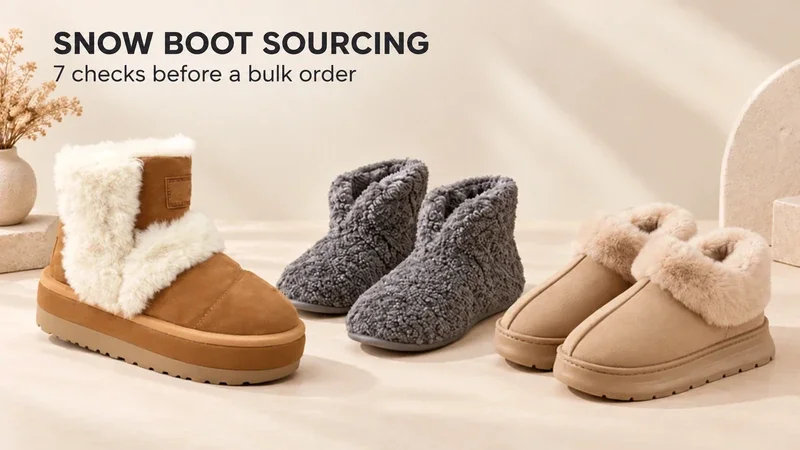
Before ordering snow boots in bulk, use the following seven checks to align your product brief, sample approvals, quotation, and delivery plan.
Bulk Snow Boot Buying Checklist at a Glance
| Check | What to confirm |
| 1. Intended use | Customer, wearing conditions, sales channel, and intended claims |
| 2. Upper and lining | Material composition, thickness references, finish, and construction |
| 3. Sizing and fit | Size system, fit reference, measurements, and size ratio |
| 4. Sole and attachment | Compound direction, weight, flexibility, tread, and joining method |
| 5. Sample approval | Approved version, revisions, branding, and production reference |
| 6. Quality requirements | Workmanship criteria, applicable tests, and inspection scope |
| 7. Commercial plan | Quantity allocation, quotation basis, packaging, and arrival schedule |
1. Define the Intended Use Before Selecting a Style
Start with where the boots will be worn and what customers expect. Indoor comfort, short everyday outings, and prolonged exposure to wet winter conditions create different development priorities.
A fashion snow boot may prioritize silhouette, softness, and easy entry. A boot intended for wetter conditions needs a construction and evaluation plan that addresses water entry. These requirements should appear in the brief before materials are selected.
Record the target customer, market, price position, expected wearing duration, and typical conditions. Identify any claims planned for the product page or packaging.
Treat terms such as “water-resistant,” “waterproof,” and “cold-weather” as requirements to clarify. A suede-like finish or plush lining does not prove them. Ask what construction and evidence would support the proposed wording for the actual style.
2. Specify the Upper and Lining Separately
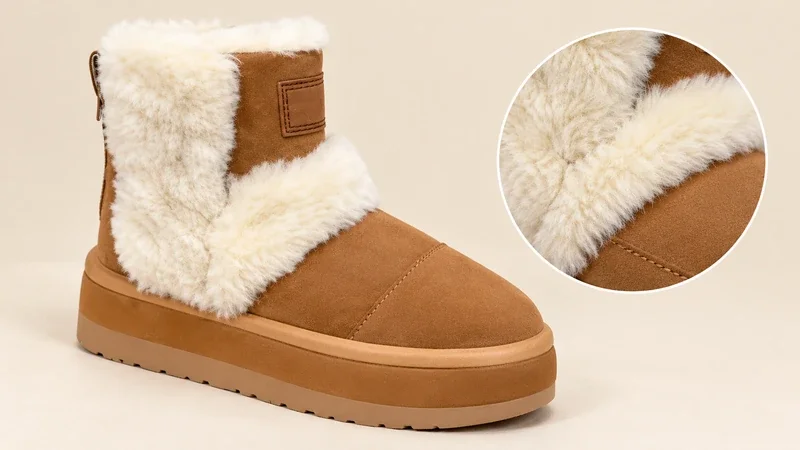
“Suede,” “fur-lined,” and “warm lining” are useful starting descriptions, but they leave important questions unanswered. A suede-like upper may use different material constructions, while a plush appearance does not establish fiber content.
Confirm the upper material, backing where relevant, thickness reference, color standard, and finish. Specify the lining separately, including composition, coverage, pile or thickness reference, and approved hand feel.
Also distinguish decorative cuff trim from the lining inside the boot. The visible cuff may not represent what surrounds the foot.
When comparing alternatives, request clear material references for each option. Keep a record of which upper and lining combination belongs to each quotation, so an appealing sample is not accidentally matched with a different production specification.
Evaluate materials in the complete sample. A thicker lining can change internal volume, entry, and fit. If a material changes after approval, review its effect on the whole boot before accepting the substitution.
3. Approve Sizing and Fit with the Intended Construction
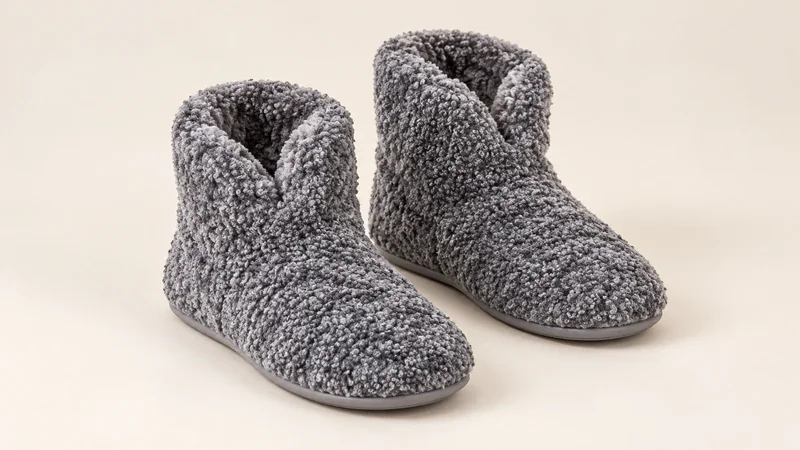
A size label is not a complete fit specification. Two boots carrying the same EU, UK, or US size can differ in internal length, toe volume, instep space, and heel hold.
Agree on the target size system, sample size, measurement points, tolerances, and fit reference. State whether buyers expect the boots to accommodate everyday socks or thicker winter socks.
Check entry as well as standing comfort. A pull-on boot can have sufficient toe room yet feel difficult to put on because of its opening or instep.
Review representative sizes before approving the full range, especially where grading affects the shaft or sole. Confirm the order ratio by size separately: an approved fit does not tell the factory how many pairs of each size to produce.
4. Evaluate the Sole and Its Attachment as a System
Outsole material matters, but it is only one part of the construction. Compound, thickness, tread, flexibility, and attachment influence how the boot behaves.
Ask whether a named material refers to the ground-contact outsole, a cushioning layer, or the complete sole unit. Review weight and bending behavior on the finished sample rather than judging an isolated component.
Confirm the joining method and any bonding or stitching requirements relevant to the design. A visually thick platform does not establish cushioning, and a deep tread does not automatically establish slip resistance.
If measurable performance is required, define the conditions, test method, and acceptance criteria. Testing on one surface or at one temperature should not become an unrestricted claim about every wearing environment.
5. Turn Sample Feedback into a Written Approval
A sample becomes a useful production reference when its approval is specific. Record the style code, size, color, material references, sample version, and date.
Separate appearance approval from fit, construction, and performance approval. “The color looks good” should not be interpreted as permission to begin bulk production.
Collect revision notes in one document with clear photographs or measurements. State whether each point is approved, needs revision, or remains open. Confirm which sample represents the final agreed construction.
For example, if a cuff must be lower, specify the agreed measurement point and revised target rather than requesting “a slightly shorter boot.” Clear feedback helps both teams evaluate the next sample against the same requirement.
Include logos, labels, packaging artwork, and placement details in the approval process. If the supplier proposes a later substitution, request an explanation and review its effect before updating the approved specification.
6. Agree on Quality Requirements Before Production
Inspection is easier when both sides know what is acceptable. Define workmanship expectations for stitching, pairing, visible adhesive, color variation, lining finish, trim placement, and sole attachment.
Decide what needs checking during material preparation, production, and final inspection. Record the sampling approach, defect categories, acceptance criteria, reporting format, and responsibility for corrective action.
Separate visual checks from laboratory evaluations. Requirements might concern attachment strength, flexing, abrasion, water resistance, or restricted substances, depending on the product and destination. Agree on the applicable scope instead of copying a generic test list.
Supplier documents and reports should relate to the relevant material, style, and requirement. General factory information does not demonstrate that a particular boot has passed a particular test.
7. Confirm the Order Breakdown and Work Back from Arrival
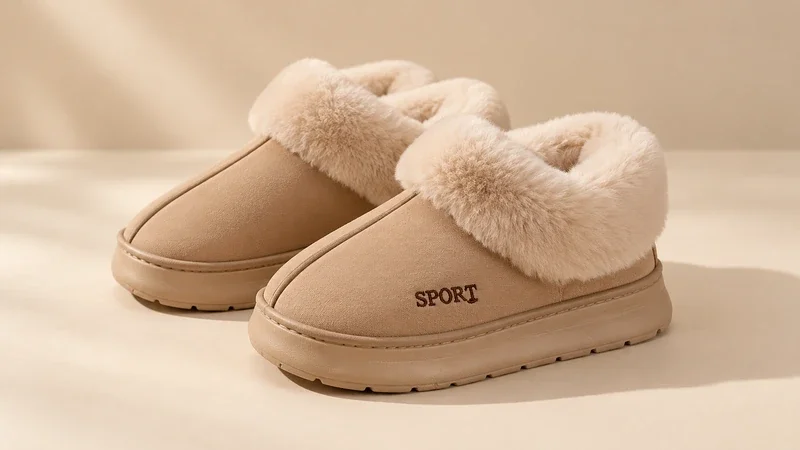
A bulk quantity must be broken down by style, color, and size. Ask how minimum quantities apply and whether custom materials, colors, branding, or tooling create separate minimums or charges.
Compare quotations on the same basis: approved materials, construction, packaging, testing scope, trade term, and delivery point. Confirm payment terms and which costs are included.
For repeat orders, retain the approved specification and ask whether materials, tooling, or packaging have changed. A familiar style name does not guarantee that every component remains available under the previous order conditions.
Then work backward from the required warehouse arrival date. Allow for sampling, revisions, material confirmation, production, inspection, shipping, clearance, and receiving.
Distinguish factory completion from arrival. Ask when the production clock starts and which approvals or payments it depends on. Confirm box dimensions, carton quantities, labels, and shipping marks early, since packing affects both receiving accuracy and freight planning.
Frequently Asked Questions
1. Can I judge snow boot quality from photographs?
Photographs help shortlist designs and visible workmanship. Fit, hand feel, attachment quality, and performance requirements need samples and appropriate evaluation.
2. Does a plush lining prove a boot is suitable for snow?
No. Lining appearance does not establish water protection, traction, or a temperature rating. Define the intended conditions and verify the requirements for that construction.
3. What should I include in a snow boot quotation request?
Send reference styles, target market, intended use, material preferences, size range, quantity allocation, branding, packaging, and required arrival date. Identify any planned claims or testing requirements.
4. Plan Your Next Snow Boot Order with H&C
At H&C, we manufacture and export home slippers and snow boots, with OEM/ODM services covering design, sampling, manufacturing, packaging, inspection, and export support.
Explore our snow boot collection for starting references. Share your preferred styles, target market, quantities, and delivery needs through our Contact Us page so we can discuss materials, samples, and an order plan suited to your project.