When sourcing home slippers, buyers often begin with the upper: plush fabric, seasonal colors, embroidery, or a distinctive shape. Yet two slippers with similar uppers can feel very different because of their soles. Weight, flexibility, cushioning, and outsole construction all influence the finished product.
EVA, TPR, and PVC are three sole materials buyers will encounter when developing home slippers. Each offers different possibilities, but the material name alone cannot tell you how a finished slipper will perform.
This guide compares the three options for slippers with textile or plush uppers. It explains where each material fits, what affects its performance, and what to confirm before placing a bulk order.
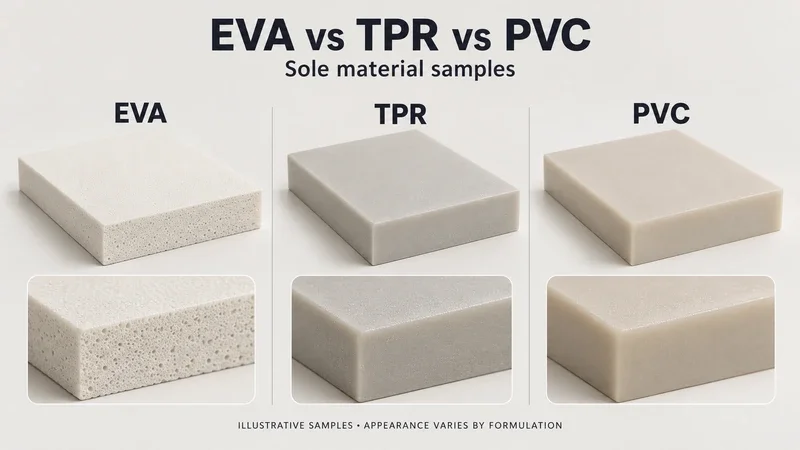
EVA vs. TPR vs. PVC Slipper Soles at a Glance
For lightweight indoor slippers, foamed EVA is often a useful starting point. TPR is worth considering when the brief calls for a molded outsole with a rubber-like feel. Flexible PVC can also be a candidate for budget-conscious collections, depending on its formulation and construction.
| Factor | EVA Soles | TPR Soles | PVC Soles |
| Weight | Foamed EVA is typically lightweight | Depends on formulation and sole geometry | Varies between solid and foamed constructions |
| Underfoot feel | Can provide soft cushioning | Can provide a flexible, rubber-like feel | Can be formulated for different softness levels |
| Development focus | Foam density, thickness, compression, and tread | Hardness, tread, weight, and attachment | Formulation, foaming, flexibility, and weight |
| Potential fit | Lightweight indoor and plush slippers | Everyday home slippers with molded outsoles | Value-focused and seasonal slipper programs |
| Cost considerations | Material usage, processing, and construction | Compound, tooling, weight, and construction | Compound, tooling, processing, and order volume |
These are selection directions rather than fixed performance ratings. Compare samples with similar sizes and intended uses, and assess the complete slipper before approving a material.
EVA Soles: A Starting Point for Lightweight Home Slippers
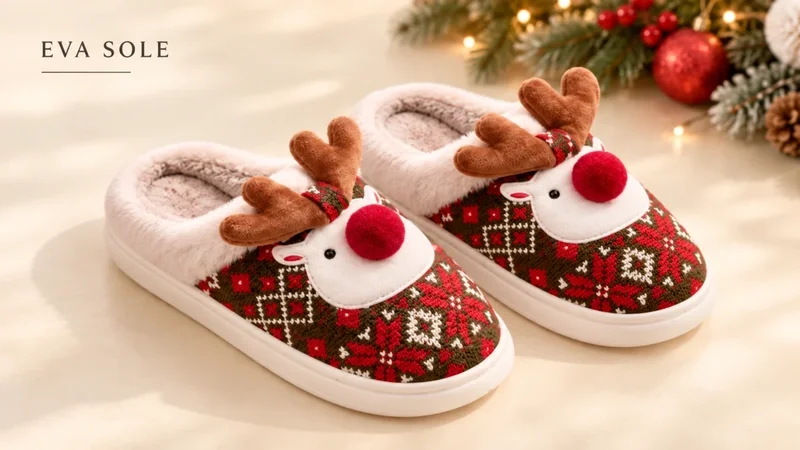
EVA stands for ethylene-vinyl acetate. In foamed form, it can provide cushioning and flexibility while keeping sole weight low. This makes it a practical option to evaluate for soft indoor slippers, including plush, animal-shaped, and festive designs.
For a bulky plush upper, a lightweight sole can help balance the overall wearing experience. However, softness should match the intended product. An especially soft sample may feel appealing initially, but buyers should also assess how it supports the foot and responds to repeated compression.
Thickness, foam density, hardness, and tread all affect the result. EVA used as an internal cushioning layer also serves a different purpose from EVA that directly contacts the floor.
During sampling, check the sole’s bending behavior, edge finish, compression recovery, and attachment to the upper. If the slippers may be worn beyond indoor rooms, discuss those conditions before assuming the same construction will be suitable.
TPR Soles: An Option for Molded Home Slipper Outsoles
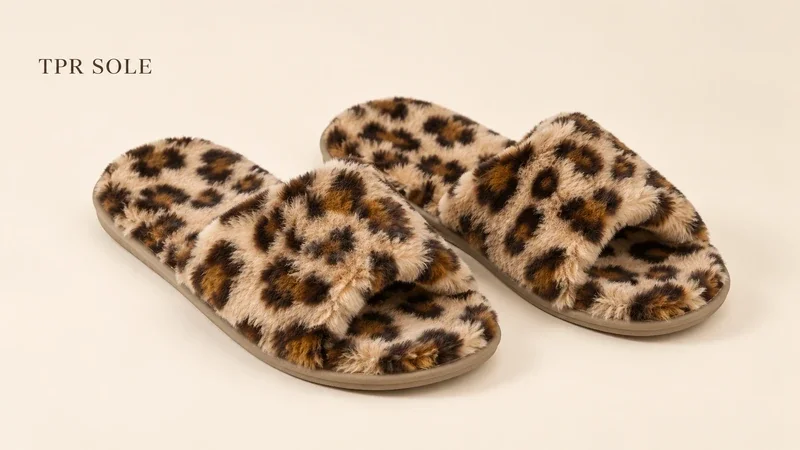
TPR, or thermoplastic rubber, combines thermoplastic processing characteristics with a rubber-like feel. It can be molded into defined outsole shapes, including tread patterns, raised edges, and branding details.
For everyday home slippers, buyers may consider TPR when developing a more structured outsole. Its suitability depends on the compound, hardness, thickness, and geometry rather than the material label alone.
A substantial sole may support the desired product positioning, but additional weight is not automatically an advantage. The slipper still needs to feel balanced with its upper, lining, and footbed.
Review the complete sample for weight, flexibility, floor contact, and upper-to-sole attachment. If occasional outdoor wear is part of the brief, identify the expected surfaces and exposure. A molded TPR outsole does not, by itself, establish that the complete slipper is suitable for outdoor conditions or has verified slip resistance.
PVC Soles: An Option for Cost-Conscious Slipper Programs
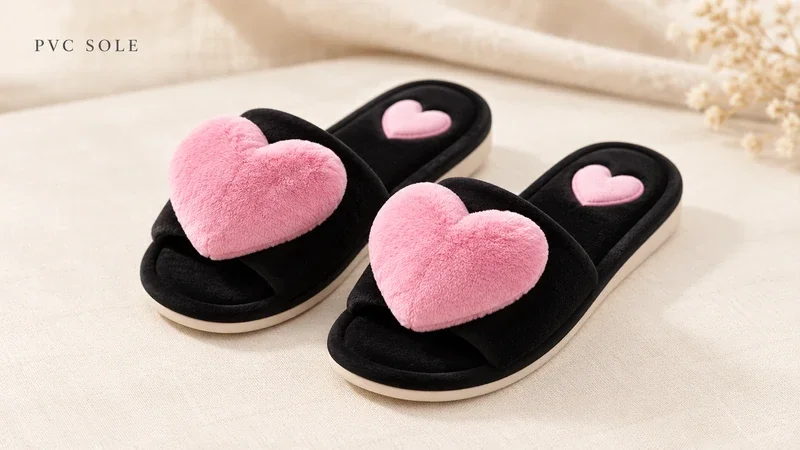
PVC stands for polyvinyl chloride. Footwear applications can use flexible PVC formulations, so comparisons with rigid PVC products are not helpful when evaluating slipper soles.
Solid and foamed PVC constructions can differ considerably in weight and feel. Buyers should therefore avoid treating all PVC soles as heavy or stiff. Ask which construction is being quoted and assess the actual sample.
PVC may be considered for value-focused home slippers or seasonal collections where appearance, specifications, and cost need careful balancing. However, its final price advantage must be checked against the proposed design and order conditions.
During development, review softness, bending behavior, sole weight, surface finish, and attachment. Where relevant, discuss the expected storage and wearing temperatures. Buyers should also communicate destination-market material requirements early and confirm the documentation or testing needed for the approved formulation.
How to Choose the Right Sole for Your Home Slipper Collection
Start with the product brief rather than selecting a material first. Three common sourcing situations illustrate how priorities can change.
Lightweight Indoor Plush Slippers
For slippers intended mainly for bedrooms and indoor relaxation, low weight, cushioning, and easy movement may lead the brief. Foamed EVA can be an appropriate first sample direction.
Assess whether the sole supports the upper without making the slipper feel bulky or unstable. Confirm the required wear performance for the intended floors and use frequency.
Everyday Home Slippers
For a collection intended for regular daily wear, buyers may place greater emphasis on outsole structure, flexibility, and durability requirements. TPR is one option to evaluate alongside the footbed and cushioning system.
The goal is a comfortable, balanced slipper. A firmer outsole can be paired with cushioning, but the combination should be approved as a complete product.
Seasonal and Budget-Conscious Collections
Christmas slippers, novelty designs, and promotional ranges often require close control of target cost and presentation. PVC and EVA options may both deserve evaluation where they are compatible with the design.
Compare quotations using the same size range, quantity, packaging, and quality requirements. Seasonal positioning should not replace a clear specification: a gift slipper still needs to meet its intended use.
What Material Names Alone Cannot Tell You
Slip resistance depends on more than whether a sole is EVA, TPR, or PVC. Compound formulation, hardness, tread geometry, floor surface, contamination, and dry or wet conditions can all affect performance. Where a measurable claim is required, agree on the test method and acceptance criteria.
Comfort also comes from the whole slipper. The footbed, foam layers, lining thickness, upper fit, and size grading influence the experience. A soft outsole cannot compensate for poor fit.
Cost requires the same broader view. Material price per kilogram does not equal cost per pair. Material usage, molds, assembly, waste, order volume, and packaging all matter. Similarly, lower product weight may help with some freight arrangements, while bulky packaging can still determine shipping charges.
What to Confirm Before Bulk Production
A useful sample approval records more than the chosen material. Before production, buyers and manufacturers should agree on:
- Product brief:target market, wearer, indoor or occasional outdoor use, and expected conditions.
- Sole specification:material, construction, thickness, hardness reference, color, tread, and agreed weight requirements.
- Fit and assembly:size range, measurement references, footbed structure, and upper-to-sole attachment.
- Appearance:edge finish, logo placement, color standards, and acceptable variation.
- Performance:required evaluations, test methods, responsibilities, and acceptance criteria.
- Approval control:the reference sample and how material or construction changes will be reviewed.
If comparing different sole options, use comparable slipper constructions where feasible. Otherwise, changes in the upper, cushioning, or size can make the comparison misleading.
Frequently Asked Questions
1. Is EVA or TPR Better for home Slippers?
EVA can be a useful starting point for lightweight cushioning, while TPR may suit a molded, rubber-like outsole direction. Choose according to the intended use, complete construction, and approved sample.
2. Are PVC Soles Always Heavier and Harder?
No. Flexible formulations and foamed constructions can change PVC’s weight and feel. Compare actual soles of similar size and purpose rather than relying on a general ranking.
3. Does a TPR Sole Automatically Make a Slipper Slip-Resistant?
No. Material selection is only one factor. Any specific slip-resistance requirement should be evaluated under agreed conditions using an appropriate test method.
4. What Should I Send a Manufacturer for a Sole Recommendation?
Send a reference design or sample, target market, intended use, size range, expected quantity, target price, and delivery requirements. Include any material restrictions or performance specifications.
Find the Right Slipper Sole with H&C
At H&C, we manufacture and export home slippers and snow boots, with OEM/ODM services covering design, sampling, manufacturing, packaging, inspection, and export.
Share your reference style, target market, intended use, and order requirements so we can discuss suitable sole options for your collection. Explore our home slipper range or contact H&C to discuss your next slipper project.