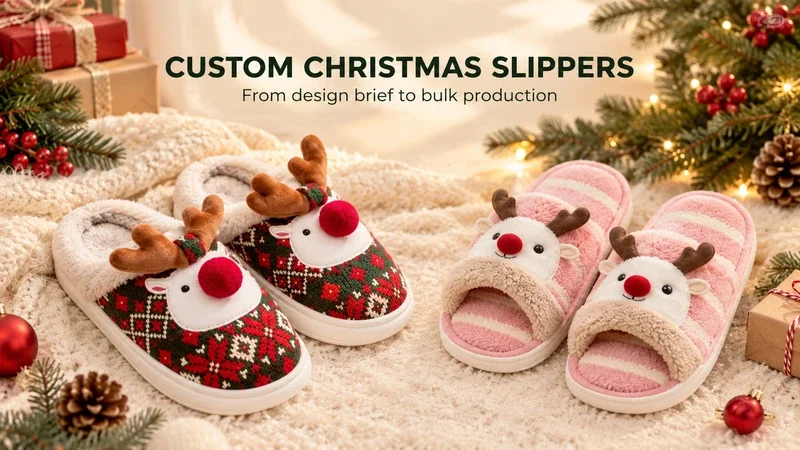
Custom Christmas slippers combine a wearable product with a seasonal gift. For brands, retailers, and importers, that creates several connected decisions: the festive design must look appealing, feel comfortable, carry the brand clearly, and arrive in time for the selling window.
A reference image can start development, but it cannot define the complete order. Raised decorations, fabric textures, size assortments, retail packaging, and approval rounds all need attention before bulk production.
This guide explains how to turn a Christmas slipper idea into a practical development brief, using festive styles such as reindeer slippers as starting references.
Start with the Collection Brief
Before choosing a motif, define who will buy the slippers and how they will be sold. A gift-shop collection, a retailer’s private-label range, and a corporate holiday gift may need different designs, branding, and packaging.
Record the target market, wearer, sales channel, target price, estimated quantity, and required warehouse arrival date. Separate confirmed requirements from areas where you want the manufacturer to propose options.
| Brief item | Information to provide |
| Product reference | Preferred style, images, drawings, or a physical sample |
| Seasonal design | Motif, color palette, decorations, and essential details |
| Assortment | Quantity by style and color, size range, and size ratio |
| Brand presentation | Logo artwork, placement, labels, and packaging direction |
| Schedule | Sample review dates, launch window, destination, and arrival deadline |
A clear brief helps the supplier quote the same product you intend to sell, rather than filling gaps with assumptions.
Keep the initial assortment manageable. Each additional color or decorative variation can create another approval and packing combination. Ask the supplier to explain any minimums by style, color, material, or packaging option before dividing a total quantity across many designs.
1. Choose a Practical Design Route
One route is to begin with an existing slipper style and discuss changes to colors, branding, or selected details. Another is to develop a new upper pattern, character shape, or construction from your own brief.
Existing references can make the starting point clearer, but customization still needs a feasibility review. A new decoration may require different sewing, while a changed upper can affect fit or material usage.
Identify which features define the collection and which are flexible. For example, a reindeer face may be essential, while its exact placement or surrounding fabric can remain open for development.
Ask how the chosen route affects samples, tooling where relevant, minimum quantities, and scheduling. Confirm the actual scope rather than relying on an OEM or ODM label alone.
2. Develop the Festive Details as Part of the Slipper
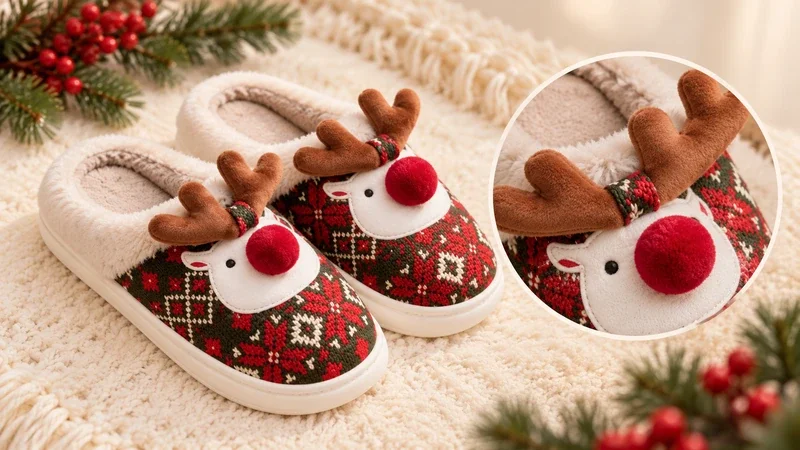
Reindeer faces, antlers, pom-pom noses, embroidery, and seasonal prints can make a slipper recognizable. They also introduce practical questions about positioning, attachment, packing, and repeatability.
Specify the decoration’s size and location relative to clear measurement points. Check left and right shoes together so faces, antlers, and patterns look coordinated.
Consider how the design changes across sizes. A motif that looks balanced on the sample size may crowd the opening on a smaller slipper. Raised elements should also be reviewed during wear and packaging trials.
Use artwork you own or have permission to reproduce. If a character design or logo needs authorization, resolve that before approving production artwork.
3. Coordinate Colors, Materials, and Sole Options
Build the palette around the intended collection rather than adding colors independently. Red and green can provide a traditional festive direction, while a softer palette may suit a different brand presentation.
Approve upper fabric, lining, trim, thread, and decoration colors together. The same color reference can look different on knit, plush, and printed surfaces.
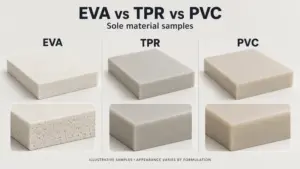
Confirm material composition and hand feel separately from appearance. Also define the cushioning and sole direction according to intended use, weight, flexibility, and cost requirements. Our house slipper collection offers additional starting references for silhouette and construction discussions.
Review the combination as a complete slipper. A thicker lining or changed upper fabric can affect fit, while a different sole may change weight and assembly requirements.
4. Add Branding Where It Works Best
A festive motif and a brand logo need to work together. Instead of placing a large logo over the main decoration, compare possible locations such as a label, footbed, side detail, hangtag, or package.
Provide clear artwork, dimensions, colors, and placement references. Ask which application methods suit the selected fabric and construction. Fine lettering that looks sharp on a screen may lose clarity on a high-pile surface.
Approve a physical example where needed. Check visibility, alignment, feel, and consistency between the pair. Confirm which branding changes create additional material, setup, or order requirements.
For a small woven label, identify its finished dimensions and sewing position. For printed packaging, use an approved artwork version and color reference. These details help prevent a correct slipper from being presented with outdated branding or the wrong seasonal message.
5. Design Packaging Around the Actual Product
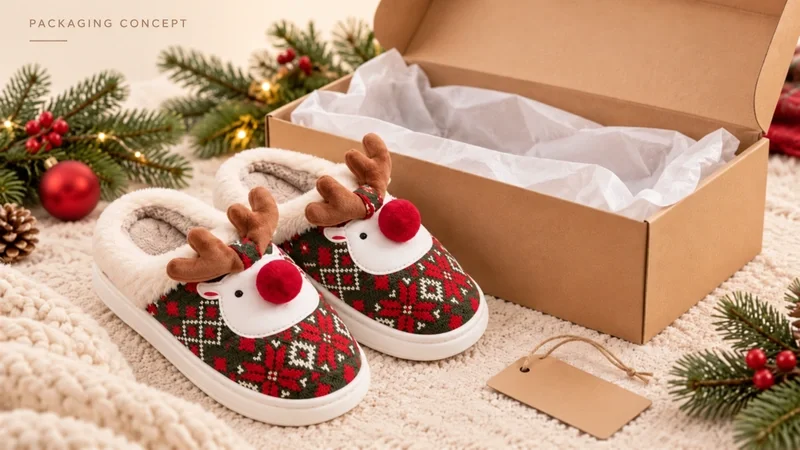
Christmas slippers may be sold as gifts, but a decorative package still needs to protect the product and support handling. Confirm whether the channel needs a bag, sleeve, hanger, box, or another agreed format.
Check the packed sample with the actual decorations. Antlers, raised noses, or plush trim may need space so the presentation remains acceptable after unpacking.
Approve artwork and retail data together: style code, color, size, barcode, labels, and any required care or material information. Confirm which information belongs on the slipper, individual package, and shipping carton.
Measure the packed product before finalizing cartons. Extra space can protect decorative features, but oversized packaging also affects carton utilization and freight planning.
6. Approve Samples Before Committing to Bulk
Use sampling to close decisions, not simply to obtain a promotional photograph. Review appearance, fit, measurements, materials, decoration attachment, branding, and packaging against the same brief.
Record the sample version, requested changes, and approval status. Replace vague feedback such as “make the face cuter” with an annotated drawing, position reference, or measurable revision.
Agree on the size range and whether representative sizes need review. If the range includes children’s products, identify the intended ages and applicable product requirements early, including any review needed for decorative components.
Retain an approved sample and matching specification. Any later material or design substitution should be reviewed before it becomes part of the production reference.
At this stage, establish the inspection points that matter to the design: matching decoration placement, consistent stitching, correct size labels, and acceptable condition after unpacking. Where a specific test is required, agree on its scope and acceptance criteria before production begins.
7. Plan Production Backward from the Selling Window
Begin with the required warehouse arrival date, then allow time for transport, clearance, receiving, final inspection, production, material preparation, and sample approval.
Ask the supplier to identify dependencies and decision deadlines. Custom colors, artwork revisions, packaging approval, or new components may affect the plan. Confirm when quoted lead time starts and what must already be approved.
Agree on the quantity breakdown by style, color, and size, together with inspection criteria and packing instructions. Seasonal goods have a defined selling window, so distinguish factory completion, shipment departure, and warehouse arrival.
Avoid treating another supplier’s published timeline as a commitment for your order. Confirm the schedule against your actual design, approvals, quantities, and shipping arrangement.
Frequently Asked Questions
1. Can I customize an existing Christmas slipper style?
An existing reference can be a useful starting point. Ask which colors, decorations, branding, and packaging changes are feasible, and confirm their effect on minimum quantities, samples, and timing.
2. When should I start developing a Christmas slipper collection?
Work backward from the required arrival date. Include sampling and revisions as well as production and shipping, then confirm a project-specific schedule with the manufacturer.
3. What should I send for an initial quotation?
Provide the reference style, target market, estimated quantities, size and color breakdown, customization details, packaging direction, and arrival deadline. Mark any open decisions that need proposals.
Create Your Christmas Slipper Collection with H&C
H&C manufactures and exports home slippers and snow boots, with OEM/ODM services covering design, sampling, manufacturing, packaging, inspection, and export support.
Explore our Christmas slipper collection for design references. Share your preferred styles, branding ideas, quantities, and delivery requirements through our Contact Us page so we can discuss a development plan for your seasonal range.